
How To Become a Luxury Real Estate Photographer

If you visit the Real Estate Photography Facebook community, you’ll see many posts asking the group for tips on how to become more successful in this niche. So often, the conversation revolves around “scaling” your business and getting more and more volume and clients.
This may be one formula for success in “Real Estate Photography” but I don’t think it translates to the Luxury niche very well. Standard Real Estate photography is essentially delivering “good enough” at lightning-fast speeds. To move into the luxury niche, we have to obsess about quality, and still turn things around pretty quickly (relatively).
In this post, I’ll detail how I built my business into being almost exclusively a Luxury / High-End Real Estate (and Architectural / Interiors) photographer in the Boulder, Colorado area.
My approach is quite different than what you’ll commonly hear from other Real Estate Photographers.
Here’s a video clip from a recent shoot. I use extensive lighting and a variety of lenses and techniques on each shoot. It is obviously not “turn-and-burn” work.
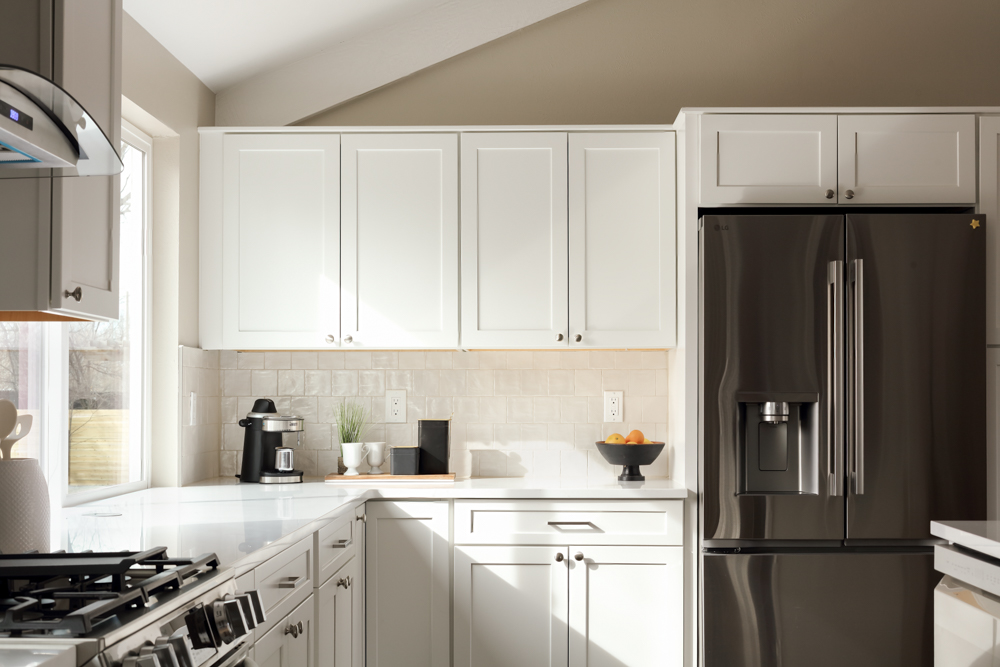
This shoot was not ultra high-end but the contractor hired me to capture the expensive remodel and upgrades in the home which were impressive.
Here is one of the final images from this shoot:
We all have to start somewhere in Real Estate Photography
I have been a photographer for over 25 years. However, it was in the last 15 years that I slowly (then very quickly) made the switch to photographing homes. I sold a business (unrelated) about 10 years ago, and was trying to figure out what to do with my newfound, and plentiful time.
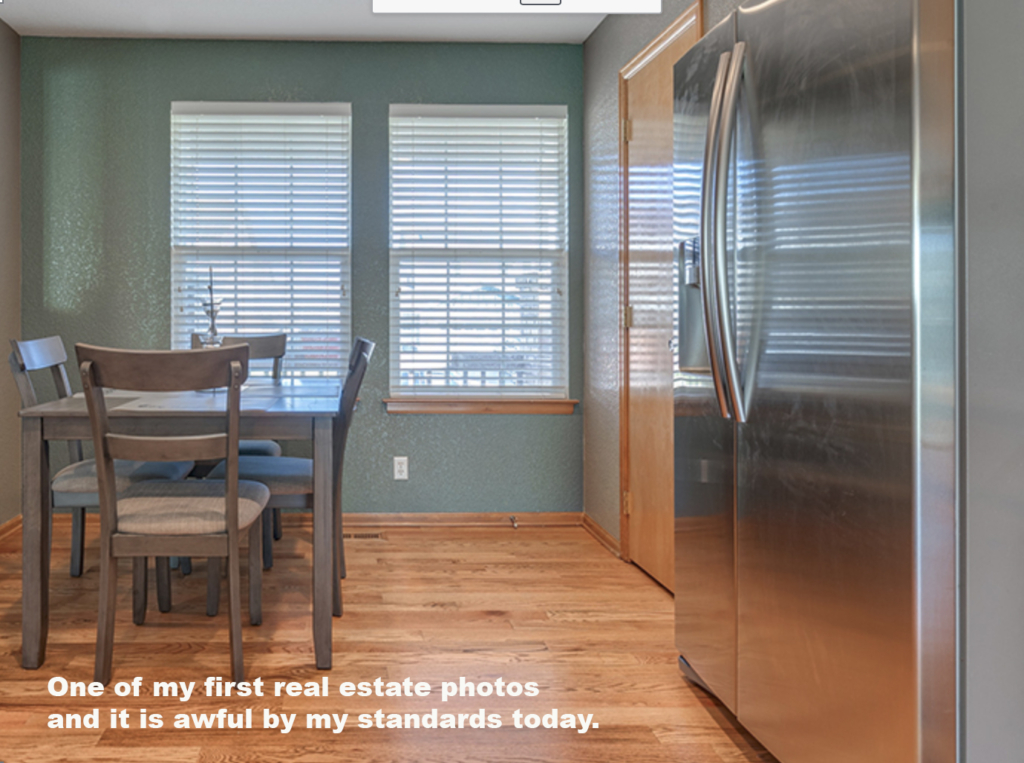
We were in the process of selling our own home, and I thought that I could photograph it better than most of what I saw online. I was right, and the agent was somewhat impressed.
By my standards today, the photos were awful. But, at that time, not bad.
That gave me the idea of giving this a try full-time.
We sold our home, and when we got to our new neighborhood, it was a daily occurrence that I would get a flyer on my door from a local Real Estate Agent. I figured “Well, if they spam me, I’ll spam them.” So, I started contacting them from the number provided on their flyer.
Immediately, I recall that 4 out of the first 5 agents took me up on trying me out as a photographer. To this day, I still work with several of them.
Thus, my full-time Real Estate Photography career was launched.
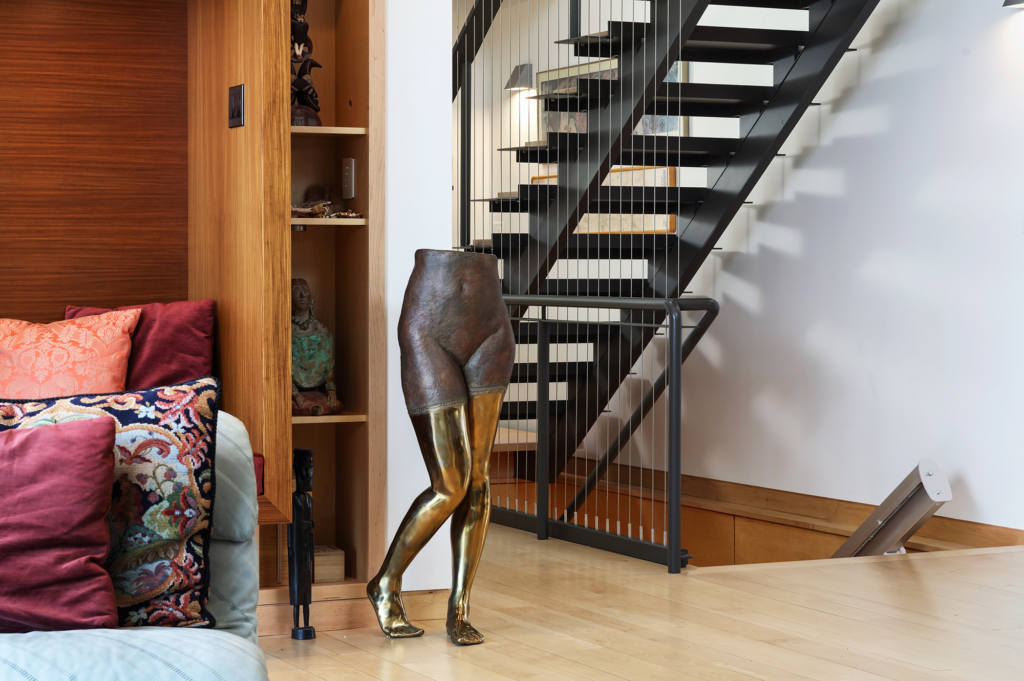
I used a 50mm lens to get this creative shot that shows the stairs in the background. Luxury Real Estate Photography needs many lenses, and focal lengths for you to “stand apart” from the crowd.
My Approach to the Business of Real Estate Photography…In the Beginning
My approach in the beginning was to simply “give away the house.” I undercut the competitors pricing to get my foot in the door. It was way more work than what was reflected in the “peanuts” I was charging, but it did do something valuable for me. It gave me plenty of opportunities to learn, and to make (a lot) of mistakes. The homes weren’t very nice, so it was a pretty forgiving environment when I screwed up.
I’d always offer to go back, and try to fix the mistakes I made. Not always possible, but I at least offered.
Mistakes I made, and worked through were:
- Photos being out of focus
- Compositional mistakes (the camera being too high, or low, or at wonky angles)
- Relational mistakes with the agent (not listening to what they want, or assuming I know everything)
- Post-processing trial and error
- Workflow on site, and in post-processing
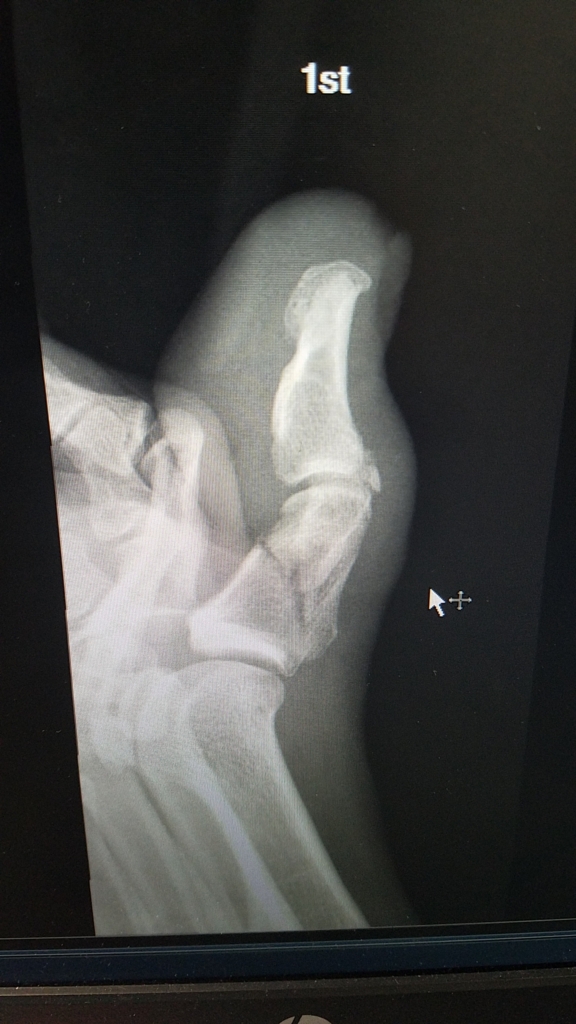
- It’s physical work, and it can wear on your body. I’ve suffered broken toes, stitches, and 2 concussions from doing Real Estate Photography. The injuries and wear usually come from having to go too fast.
Like the Facebook Group above, I was all about volume. “Turn and Burn” was the name of the game, and I got to a point quickly where I was doing 2-3 shoots a day. That’s a lot, especially if you (like me) have a family.
I did get a ton of practice, and time “in the field,” but this quickly led to extreme burnout. I knew this was not sustainable.
My top “Techinque” tip? Learn to use lighting, and stay away from “HDR Photography.” Learn from Scott Hargis on lighting techniques for Real Estate Photography. This is an excellent starting point, and is where I began my journey many years ago into learning how to light rooms and spaces. Advanced techniques on lighting can be learned from Stephen Karlisch.
The Problem with Real Estate Photography as a Sustainable Business
I can comfortably say now that I very much dislike the standard niche of Real Estate Photography. I now do mostly Architectural and Luxury Real Estate (which, I’ll argue, is quite different from what most consider “Real Estate Photography.”
Why Standard Real Estate Photography Becomes an Unfulfilling Grind:
- Agents typically want 30-40 photos within 24 hours
- Photographers often have to outsource processing, which leaves out creativity, control, and results in very mediocre (at best) images
- Most agents don’t care about you at all (as a person). They’ll drop you in an instant for someone else who can do it faster (not better). Speed is king, which often leaves quality to the wayside.
- Real Estate Photography is an emotional business. It’s the largest transaction of most peoples’ lives. We, as photographers often get pulled into that with last-minute reschedules, or demanding sellers on-site micro-managing the shoot.
I quickly learned that this is not what I wanted to do.
Instead, I embraced a new approach to my business that is a bit different, but for me, has resulted in so much more fulfillment, and has opened up opportunities in places I didn’t expect (think Architectural Work).
My Approach to Becoming a Successful LUXURY Real Estate Photographer
In the beginning, I had the occasional shoot for a Luxury Realtor where I would do everything – Photos, Video, Drone, Dusk/Twilight, 360 Tours, Lifestyle photos, and Social Media captures. The whole package would be $1,500 – $3000.
The light went on for me. I thought that if I could do one of these shoots a week, I am set.
I’d much prefer doing one HUGE shoot a week, over 10-15 small, turn-and-burn shoots for average agents.
My plan for this to allow me to pivot almost completely away from Standard Real Estate Photography into almost a Luxury-Only market included:
- Quality is #1 always. I deep-dived into learning how the best photographers work. Every shoot I try to get better, even by a little. Mediocre work is not acceptable to me any more
- I treat my top agents like gold. I currently work with 10 agents that account for over 90% of my Real Estate Photography business. I’ve worked with most of them for years. They know that I will swing for the fences every time I photograph for them. They simply won’t use anyone else but me.
- Trust is paramount. I show up when I am supposed to, and I deliver when they need the photos. Period.
- I let the agent “steer the car.” I listen to them and I do what they want. I’ll always respectfully offer my feedback, but will defer to them – always.
- I set realistic expectations in terms of how much time things will take, and how much time I will need in post-production. Most of my agents know that if they give me 3 days to a week to turn media around, they will get the best product possible.
- I insist that sellers, pets, and contractors are gone during the shoot. If it’s not possible, I will make the exception with the caveat that “You will not get my very best work” if nonessential people are present during the shoot. Most luxury agents know and understand this.
- Build a portfolio with your best work and share it on your website (essential) and, on Instagram. I have also learned that a lot of top agents are using LinkedIn again.
- Price your work accordingly. Luxury agents usually won’t blink an eye at being charged appropriately for luxury-level work.
- Keep up on your skills and always try to learn new things
- Adding videography, drone, and 360 tours to your “toolbox” is essential.
- Learn to say “No” to work that does not inspire you or that doesn’t “move the needle” for your business if you are able to. Instead, use that time to work on your marketing, website, blog or social media presence.
One of my favorite “cimenatic” videos I did a few years ago for a Luxury Home in Boulder, Colorado
Branching into New Photography Niches
There is some crossover with Luxury Real Estate photography into Interior Design, and Architectural Photography. By keeping my website current with my best photos, I’ve attracted clients like Builders, Architects, and Interior Designers. I’ve even photographed a number of Recreation Centers!
If we, as photographers of “spaces” spend the time to develop our craft, and push the limits of quality, we start to get noticed, and those emails and phone-calls from higher-caliber clients become commonplace.
We can’t get eyeballs like that if we are doing “average” work, and outsourcing the most important step of the process (the editing).
Most hugely successful Architectural or Luxury Photographers do a small handful of projects every month. These are high-dollar, immersive projects where the client is paying for the PHOTOGRAPHER’s work – not the work of an overseas editor.
Swing for the fences every time and eventually, people will start to notice!