
Will AI Replace Architectural Photography?

Like everyone else who makes a living with a camera, I have been fascinated, and also un-nerved a bit by the advances with AI image creation and manipulation – especially since the recent release of “Nano Banana.”
There seem to be two vastly different predictions on how this will affect Architectural Photography in the future. I’ll present both sides, and then chime in on my strong feelings on how I think AI will affect and shape our architecture photography niche.
I do believe that AUTHENTICITY will prevail over Artificial Intelligence…for now.
Theory 1: AI Will Replace Architectural Photography
Let’s face it – we are in a new era of digital manipulation. Take a look at this example that I created yesterday in about 30 seconds using Google Gemini (Nano Banana). This was created from one STILL image with the prompt “create a video transforming this image into a winter scene.” That’s it!
Scary isn’t it?
This first theory is summed up by Tom May for Digital Camera World. He writes “Why hire a human to shoot your buildings when AI can build entire worlds from scratch?”
He is correct that AI can probably (if not now, very soon) will be able to digitally create whatever you physically built to where it is almost indistinguishable from reality.
For the most part, this has already been happening.
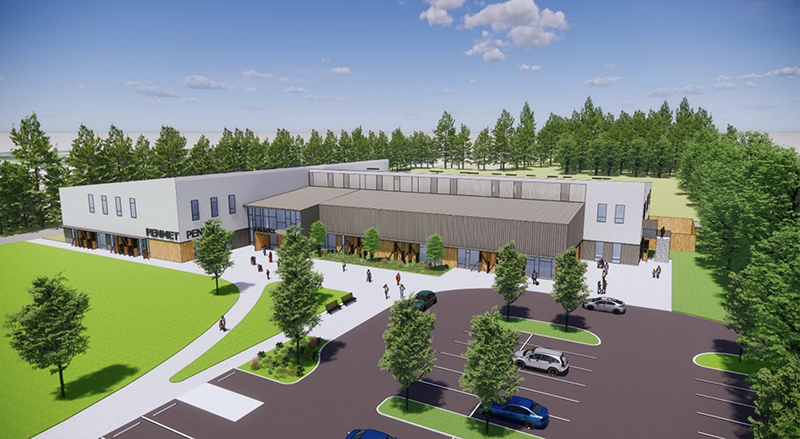
We’ve all seen those digital renders of beautiful buildings, facilities or commercial locations with beautiful light, skies, and digitally inserted people (or models) interacting with the scene.
In my view, and experience, these digital renders have always been used for “planning” purposes and for creating a “vision” of the building.
For these planning and conceptual purposes, I do believe that AI will be an incredibly useful tool for Architects – as it already has been for years. It will almost certainly get better on an exponential scale in the coming years.
However, architects will demand an authentic representation of their work once it is completed.
Theory 2: AI Will Not Replace Architecture Photography
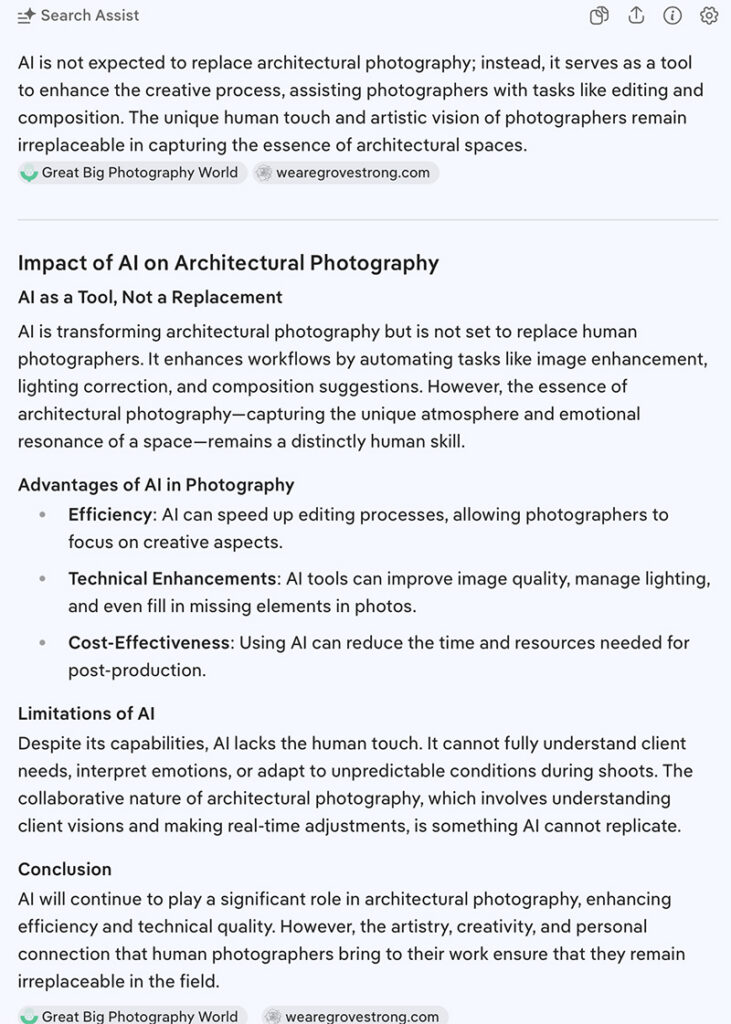
It’s almost funny to me that a simple google search of “Will AI replace Architectural Photography” came up with this answer:
“AI is not expected to replace architectural photography; instead, it serves as a tool to enhance the creative process, assisting photographers with tasks like editing and composition. The unique human touch and artistic vision of photographers remain irreplaceable in capturing the essence of architectural spaces.”
Great Big Photograpy World and AI as a Tool not a Replacement
Most of the research I have done says that areas like Product Photography, Corporate Headshots and basic Landscape Photography will be vulnerable to AI.
I do agree with this mostly. Some niches will be more vulnerable than others.
Those that still need great precision, creativity, and collaboration (like Architectural Photography) will need a human behind the images.
My Theory: AI will NOT replace Architectural Photography (at least for now) but will be a useful tool
I don’t agree with Tom May’s article asking “why a photographer is needed if AI can create it from scratch.”
To represent the final, completed project, no architect, in my opinion, will settle for a computer-rendered representation of their architectural masterpiece. I certainly wouldn’t.
I strongly feel that most professional architectural photographers will not be out of work, at least any time in the very near future.
Of course, things change with technology, and the economy so quickly that a year from now, things might look quite different. AI may be so cheap, and the economy might be so shaky that Architectural firms could hypothetically forego paying for a photographer if the AI output is good enough, and cheap enough.
That’s the worst case, near-term scenario that I can think of.

Photography, and photographers will continue to be essential in Architectural Photography for the following reasons:
- AI is exactly that – it’s fake or, as the name clearly states – it’s artificial. Architects want authenticity. When they – the architects – have poured their blood, sweat and tears into every detail of the project, they will want actual, real-life representations of their work. This, to me is the strongest argument in favor of architectural photographers and the future of AI.
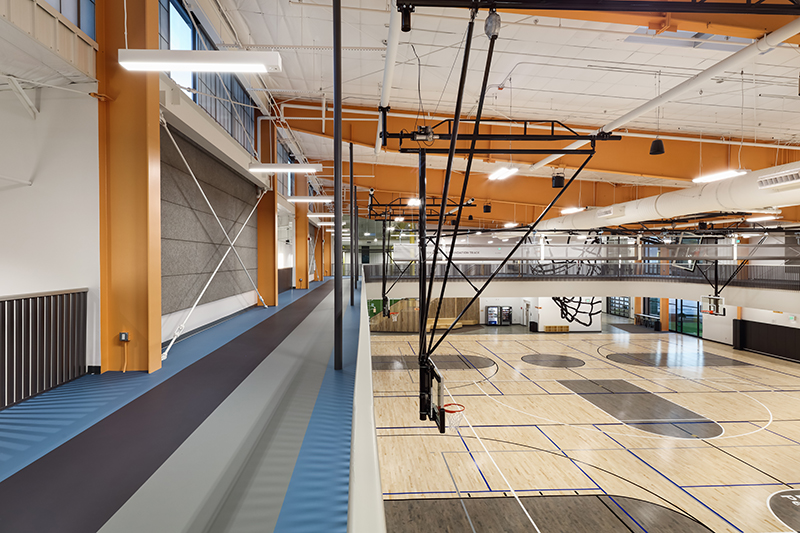
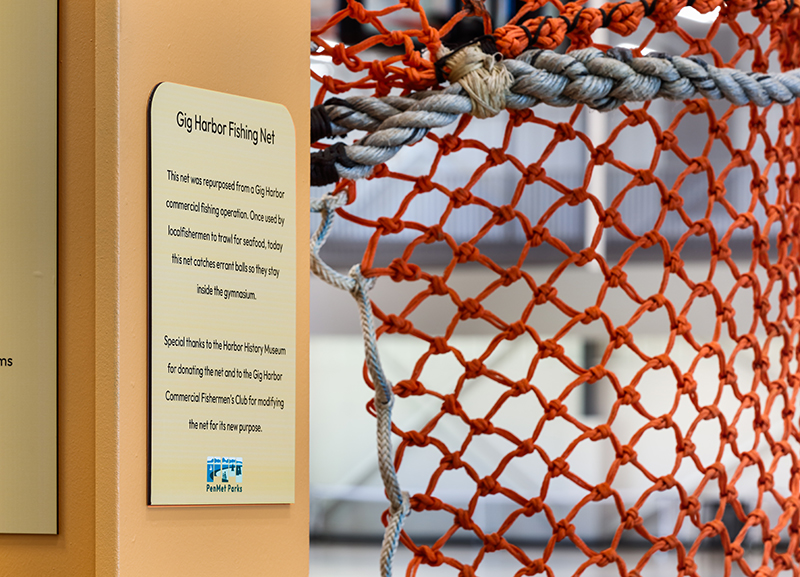
- Details are important. For example, I photographed a Recreation Center recently for the architects and several sub-contractors, and they used a fishing net to separate the basketball court from the front desk. This was an authentic feature that would (to me) be very hard to create digitally and satisfy those people who salvaged the net to be re-purposed in such a creative way. The people who put the hard work into the small details like fixtures, unique features and the like won’t settle for a digitally created version of the final product. I sure wouldn’t.
- Collaboration is key to architectural photography. I sometimes spend MONTHS planning a shoot, and there are a lot of people to please. As mentioned, sub-contractors, artists, interior designers, flooring contractors – you name it – all put months, and sometimes years into these architectural creations. The final product needs to be an actual representation of their work.
- Handling unpredictable problems or issues. AI will struggle to manage issues that happen on-site, or scheduling problems, or interpreting the very precise vision of an architect or project manager. At least for now. A human needs to be able to not only assess the problem at hand, but also the subtleties of the human emotions involved.
- There is a satisfaction with seeing your completed work accurately and realistically depicted in an actual, human-captured photo.
“Despite its capabilities, AI lacks the human touch. It cannot fully understand client needs, interpret emotions, or adapt to unpredictable conditions during shoots. The collaborative nature of architectural photography, which involves understanding client visions and making real-time adjustments, is something AI cannot replicate. AI will continue to play a significant role in architectural photography, enhancing efficiency and technical quality. However, the artistry, creativity, and personal connection that human photographers bring to their work ensure that they remain irreplaceable in the field.”
AI’s Future Influence and Role on Architectural Photography
In sum, AI like Google’s Gemini and ChatGPT will prove to be valuable tools in Architectural and Commercial Photography, as well as many other niches. These tools can be used to enhance photos, remove objects, fix color issues, add furniture and so much more.
However, an authentic BASE image needs to be the foundation of all photos when it comes to representing an architect’s work – at for least the architects who care and who are proud of their work.
The base photo needs to showcase the reality of the space, including the design features and details that convey the authentic STORY, HISTORY and VISION of the space as intended by the architects and designers. It’s the photographer’s job to interpret the intent of the space, and transfer that 3-dimensional reality into an authentic and believable 2-dimensional medium.
This BASE photograph will be the photo that is produced by a talented Architectural Photographer who understands composition, light, problem solving, and who can relate on a human / emotional level with those PEOPLE who are the creative vision behind the space, structure or architectural project.
All Photographers Will Need to Up Their Game
Artificial Intelligence will also push all of us to be better photographers and editors. The quality enhancements from AI will make those who ignore it – call them “AI Luddites” – fall behind and be forgotten. We will all need to learn AI as a tool to enhance our photos within the bounds of reality, while resisting the urge to take it too far.
Scott Burrows, an Architectural Photographer based in Canada states that “It’s not about fitting your project into whatever imagery happens to exist. It’s about shaping the imagery around your project, ensuring that every frame works hard for you and is a true representation of who you are.”
Well said Scott.
Architectural Photography is all about creating visuals with intent, not computers.
No amount of AI will be a satisfactory placeholder for the authentic representation of an Architect’s work. A viewer may not know what’s real or fake in an image, but the Architect will.